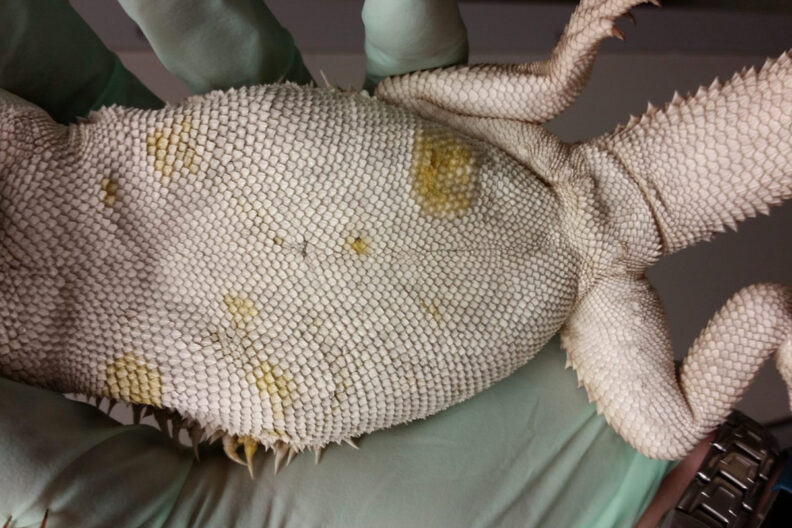
Yellow fungus disease is a serious and often fatal fungal infection in pet bearded dragons. It is caused by Nannizziopsis guarroi and leads to yellow or brown crusted skin lesions that may spread rapidly.
If your bearded dragon’s skin looks yellow, thickened, or scaly — especially if the areas seem to be expanding — veterinary evaluation is recommended promptly.
What are the signs?
Common signs include:
- Yellow to brown crusted skin
- Thickened or swollen scales
- Rough or flaky patches
- Skin that appears “dirty” but does not clean off
- Painful or sensitive areas
Lesions may begin small but often spread over time.
How is it diagnosed?
Diagnosis may include:
- Skin scraping or scale removal
- Biopsy
- PCR testing
- Fungal culture
Because the disease can progress quickly, treatment may begin before test results return.
How is it treated?
Treatment often requires aggressive and prolonged therapy.
Options may include:
- Surgical removal of infected tissue
- Systemic antifungal medication (such as itraconazole)
- Long-term oral medication (weeks to months)
- Strict enclosure disinfection
Topical medications may be used for secondary infections.
Treatment can be costly and is not always successful.
Is yellow fungus contagious?
Yes. The fungus can spread between reptiles.
To reduce risk:
- Isolate infected reptiles immediately
- Disinfect enclosures and supplies
- Do NOT reuse enclosures that have been used for bearded dragons
- Clean hands and tools after handling
- Handle infected reptiles last
- Use a 10% bleach solution (minimum 2-minute contact time)
New reptiles should always be quarantined before introduction to other pets.
Poor husbandry increases risk. See our Bearded Dragon Husbandry guide for prevention tips.
What is the prognosis?
Prognosis is often guarded to grave.
- Recurrence is common
- Advanced cases may not respond to treatment
- Early intervention improves survival
If your dragon appears painful, lethargic, or stops eating, seek veterinary care immediately.
Acknowledgment
This FAQ was developed using information from the senior paper of Angela M. Heggen (’25 DVM), “Yellow Fungus Disease and Metabolic Bone Disease: Two Common Problems of Pet Bearded Dragons,” submitted October 9, 2025, under the guidance of Dr. Nickol Finch.
This information is not meant to be a substitute for veterinary care. Always follow the instructions provided by your veterinarian. Washington State University assumes no liability for injury to you or your pet incurred by following these descriptions or procedures.