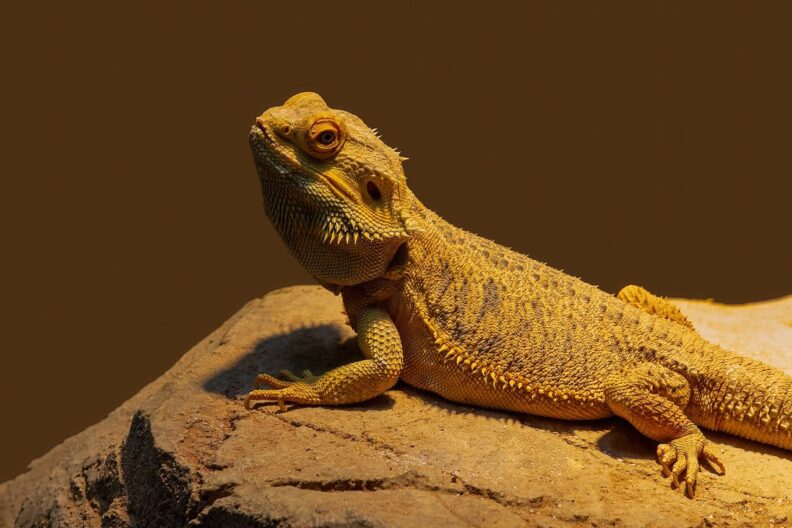
Metabolic bone disease (MBD) is one of the most common and preventable diseases in pet bearded dragons. It is typically caused by calcium deficiency, inadequate UV-B lighting, improper diet, or a combination of these factors.
If your bearded dragon has weak legs, a soft jaw, tremors, or difficulty climbing, metabolic bone disease may be a concern.
What causes metabolic bone disease?
Common causes include:
- Insufficient dietary calcium
- Lack of vitamin D3
- Inadequate UV-B exposure
- Improper calcium-to-phosphorus balance
Without proper UV-B lighting, dragons cannot absorb calcium effectively.
For guidance on proper lighting and diet, see our Bearded Dragon Husbandry guide.
What are the signs?
Signs may include:
- Weakness or difficulty walking
- Swollen jaw (“rubber jaw”)
- Limb deformities
- Muscle tremors
- Lethargy
- Loss of appetite
- Fractures
- Seizures (advanced cases)
Juveniles are particularly vulnerable.
How is it diagnosed?
Diagnosis may involve:
- Review of husbandry and lighting setup
- Radiographs showing bone thinning or fractures
- Bloodwork showing low calcium or abnormal phosphorus
Early disease may not be obvious without veterinary evaluation.
How is it treated?
Treatment focuses on correcting deficiencies and stabilizing the patient.
Therapy may include:
- Injectable or oral calcium supplementation
- Vitamin D3 supplementation
- Enclosure and lighting correction
- Dietary adjustments
Severe cases may require hospitalization.
Long-term correction of husbandry is essential to prevent recurrence.
What is the prognosis?
Prognosis depends on:
- Severity at diagnosis
- Presence of fractures or seizures
- Owner compliance with treatment
Early intervention improves outcomes. Without correction of husbandry, the condition often returns.
If your bearded dragon shows weakness, tremors, or swelling of the jaw or limbs, contact your veterinarian promptly.
Acknowledgment
This FAQ was developed using information from the senior paper of Angela M. Heggen (’25 DVM), “Yellow Fungus Disease and Metabolic Bone Disease: Two Common Problems of Pet Bearded Dragons,” submitted October 9, 2025, under the guidance of Dr. Nickol Finch.
This information is not meant to be a substitute for veterinary care. Always follow the instructions provided by your veterinarian. Washington State University assumes no liability for injury to you or your pet incurred by following these descriptions or procedures.