Mobile service in the field.
AGRICULTURAL ANIMAL AND EQUINE VETERINARY CARE
Mobile Service
Bringing mobile care and veterinary expertise to your herds and large animals within 60 miles of Pullman, WA
Agricultural Animal & Equine Mobile Veterinary Service
Our mobile unit includes highly trained veterinarians, residents and interns, and fourth‑year veterinary students, ensuring you receive the highest level of expertise with the convenience of on-site service.
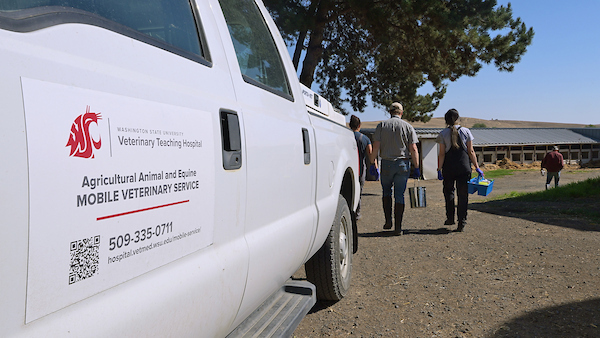
On‑Farm Mobile Veterinary Services
We provide routine and preventive large animal care in the field for:
- Cattle (beef and dairy)
- Small ruminants (sheep & goats)
- Camelids (llamas & alpacas)
- Pigs
- Equine (horses, donkeys, mules & zebras)
Services may include wellness exams, vaccinations, herd health evaluations, lameness exams, pregnancy checks, nutrition consultation, and other essential large‑animal medical needs.
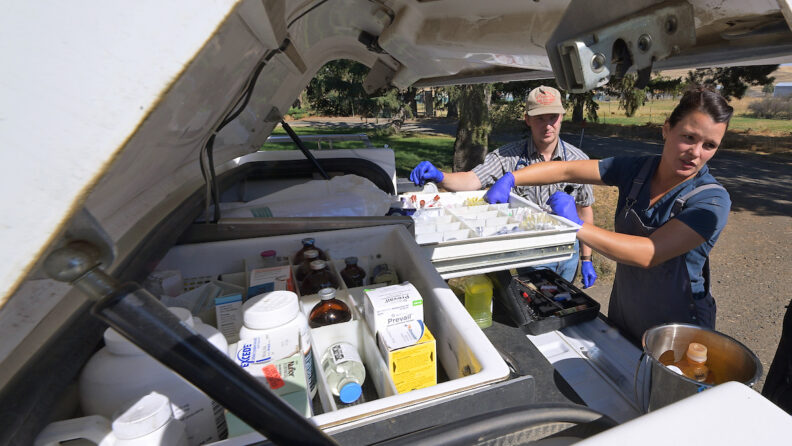
Some medical services we offer
- Routine care, including vaccinations and parasite control
- Livestock internal medicine, including infectious disease and non-infectious disease, like rumen problems and respiratory disease
- Lameness evaluation and treatment
- Heath certificates
- Basic field surgeries
- Euthanasia
Mobile service stories
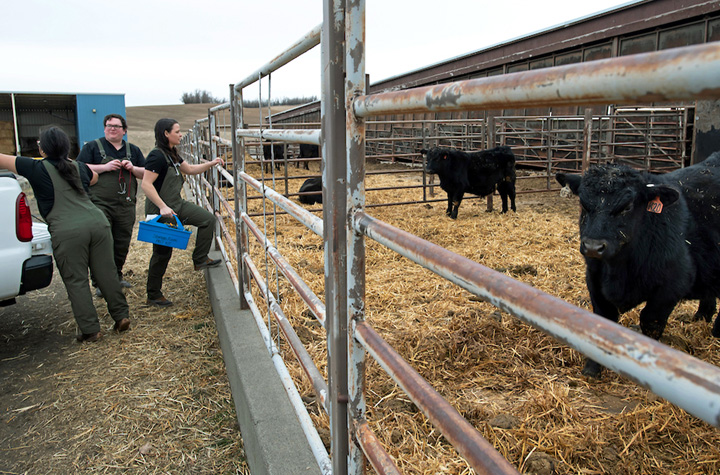
Mobile service to improve access to large animal veterinary care
The new Large and Agricultural Animal Ambulatory Service offers preventative and general care for cattle, horses, camelids and other large mammals in a 60‑mile radius around WSU Pullman on weekdays.
Large animal health topics
- Equine Herpesvirus-1 (EHV-1) and Equine Herpesvirus Myeloencephalopathy (EHM) Equine herpesvirus-1 (EHV-1) is a highly contagious virus that can cause respiratory disease, abortion in pregnant mares, neonatal death, and neurologic disease.
- WSU alerts equine community to multi-state EHV-1/EHM outbreak linked to national rodeo events Washington State University is urging horse owners to remain vigilant following a multi-state outbreak of Equine Herpesvirus Myeloencephalopathy (EHM), the neurologic form of Equine Herpesvirus-1 (EHV-1).
- Blue-green Algae (Cyanobacteria) Blooms occur in bodies of fresh water and exposure can be deadly to animals.
Questions about giving?
Contact Kay Glaser or 509-335-4835.