HOSPITAL-WIDE SERVICES
Diagnostic Imaging
Working with veterinarians across the hospital to diagnose patients and develop the best treatment plans
Diagnostic Imaging
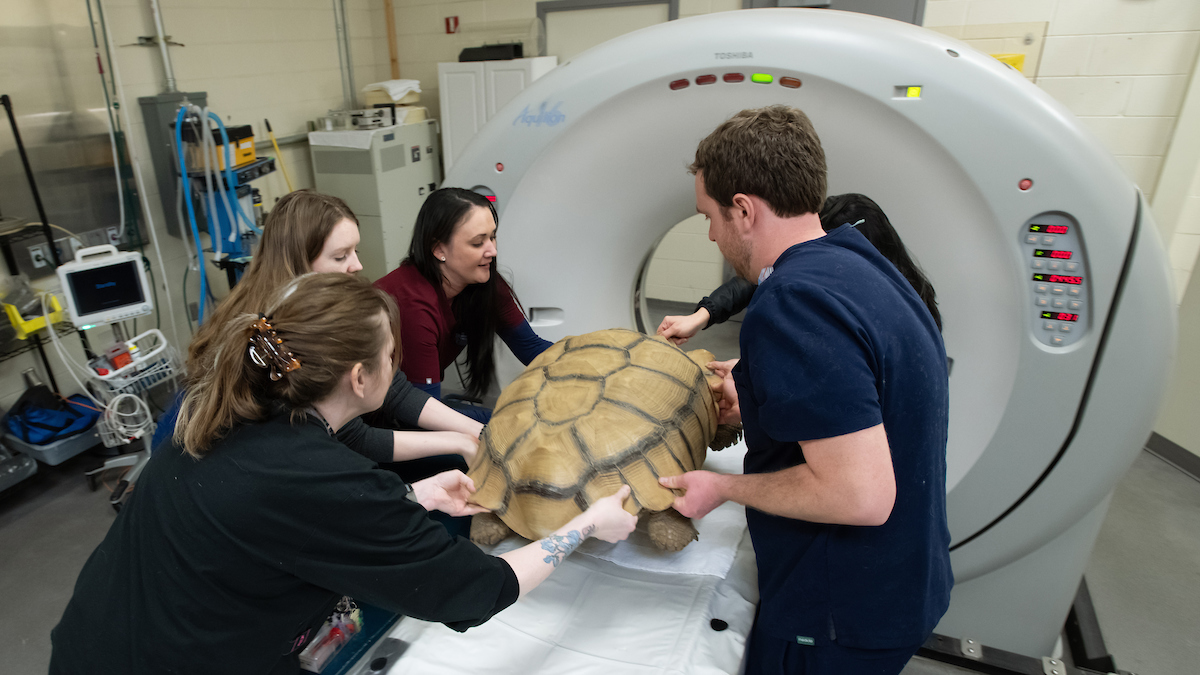
With advanced imaging technologies – of the same caliber found in modern human hospitals – and highly trained and experienced staff, our diagnostic imaging team supports nearly every service in the hospital to diagnose patients and develop the best treatment plans.
Imaging modalities to diagnose patients and monitor therapy
- Radiography, commonly known as X-rays, is often the first modality used to investigate nearly all body systems.
- Ultrasound is very useful to view soft tissues, particularly abdominal organs.
- Computed tomography, or CT scan, provides high-resolution images for nearly every body system in our small animal patients and is vital for planning radiation therapy to treat cancer. For large animals, it is used to evaluate the limbs and head.
- Fluoroscopy allows our patient care teams to see how patients breathe, swallow, and cough in real-time. It is often used to diagnose collapse of the airways or esophageal disorders.
- Magnetic resonance imaging, or MRI, is used for imaging soft tissue structures and considered the gold standard for the evaluation of the brain and spinal cord.
Hospital Stories

New CT scanner to benefit pets throughout the region
With the addition of a new CT scanner, WSU’s Veterinary Teaching Hospital can deliver faster, more precise diagnoses — improving outcomes for animals.
Gifted 3D printer advances veterinary care at WSU
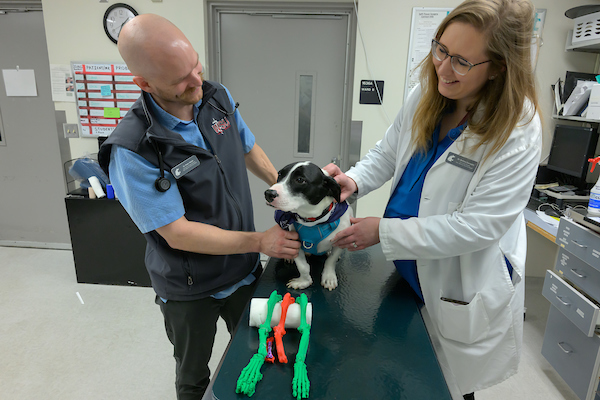
A new 3D printer donated to the Washington State University Veterinary Teaching Hospital is helping to modernize how veterinarians approach complex orthopedic surgeries.

Pit bull overcomes life-threatening illness thanks to WSU veterinarians
A year after a life-threatening health crisis, 10‑year‑old pit bull Thorton is thriving thanks to the expert care he received at the university’s Veterinary Teaching Hospital.