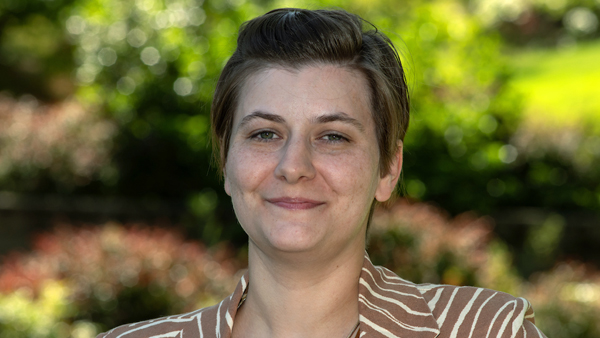
Dr. Lela B. Remington is a small animal internal medicine resident at Washington State University’s Veterinary Teaching Hospital, where she is helping to provide advanced care for dogs and cats while she completes a three-year residency program.
Residents are veterinarians who have typically completed an internship and are now advancing their training to become experts in a focused area of veterinary medicine. They serve as an integral part of the hospital’s clinical and teaching mission.
Originally from Los Angeles, Dr. Remington earned a bachelor’s degree in biochemistry from California State University, Northridge, and a Doctor of Veterinary Medicine and Master of Public Health from Midwestern University in Glendale, Arizona. She brings a strong background in medicine and public health to her work, with a passion for collaboration, problem-solving, and improving patient outcomes.
What is your specialty area of veterinary medicine, and what drew you to it?
My specialty is small animal internal medicine. I began working with small animals (dogs and cats) as a teenager in high-volume, high-quality shelter medicine where I fell in love with community engagement and collaborative problem-solving on cases that needed care. I’ve always been fascinated by medicine, disease investigation, and the connections among human, animal, and environmental health. Small animal internal medicine brings those interests together perfectly. Working with the Small Animal Internal Medicine service at the Washington State University Veterinary Teaching Hospital has been rewarding!
What first sparked your interest in veterinary medicine?
My curiosity started close to home. As a kid I explored the open fields near our house cataloging bugs, lizards, rabbits, and other wildlife. That early curiosity, paired with reading my parents’ books on human infectious diseases growing up, naturally evolved into a desire to pursue veterinary medicine where science and compassion meet.
What do you find most rewarding about residency training?
The relationships with patients, caregivers, and the team. Hearing different perspectives from pet caregivers and receiving updates months or even years later is incredible. Seeing how our care impacts a pet family over time is the best reminder of why we are here.
What advice would you give veterinary students who are considering residency?
Seek mentorship. Connect with people working in the field you’re considering. Ask about their day-to-day, training path, and favorite resources. Student clubs often host specialty panels — attend when you can and come with questions.
Engage in community-level care. Even if you plan to specialize, exposure to a range of practice settings builds clinical judgment, humility, and adaptability. These are skills you’ll rely on in any general practice setting or specialty.
Advocate for yourself and your team. Develop strong leadership and communication habits early. Healthy team dynamics, clear expectations, and mutual respect are essential to becoming a well-rounded clinician in any field!
Outside of the hospital, how do you like to spend your time?
I love trying new things at home — mostly baking, cooking, painting, and reading. It’s a great balance to the pace of the hospital and keeps me curious and creative.