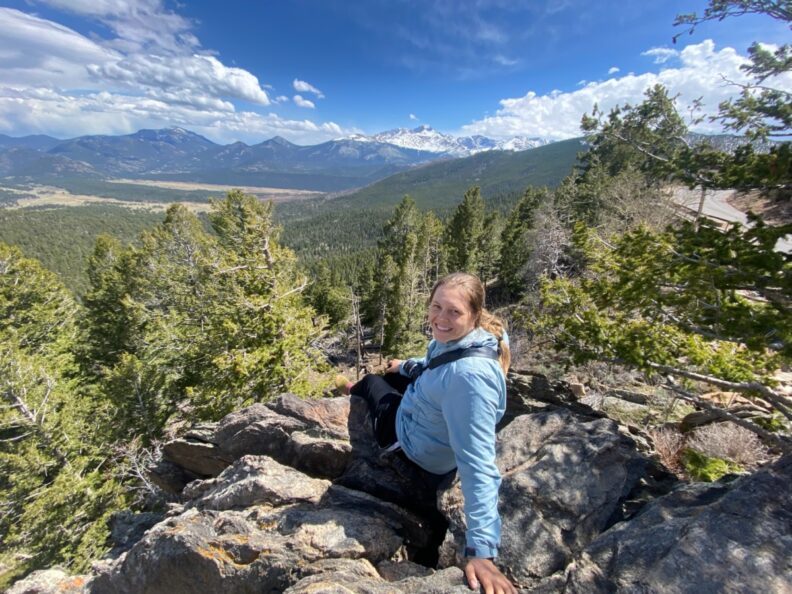
As a clinical pathology lab assistant at the WSU Veterinary Teaching Hospital, Kristie McGourin is a vital link between the lab and veterinary teams, helping ensure timely, accurate diagnostic testing for patients across the hospital. From accessioning blood samples and coordinating send-out tests to running CBCs and managing lab communications, she keeps the day moving behind the scenes. Originally from Spangle, Washington, Kristie earned her B.S. in animal science with a pre-health minor from the University of Idaho and brings a lifelong passion for animal care rooted in her experience growing up on a sixth-generation family farm. She and her fiancé, Sam Faerber, enjoy spending time in the great outdoors.
What is your typical day like at the Veterinary Teaching Hospital?
My day starts off by opening the window at the Clinical Pathology Laboratory. I log into VADDS (the lab interface system) and ezyVet (the hospital’s program); then, I start accessing blood samples immediately. I am the bridge between the lab and the veterinarians in the hospital. As samples are dropped off at my window, I accession them by copying the patient’s information into VADDS and order the tests that are being performed on the specimen. This lets the interface, analyzers, and staff know what tests will be performed on what samples. Along with this, I do most of the lab’s direct communication by answering all the phones, responding to the lab’s emails (mostly from referral clinics), looking up results, calling about high or low panic values, and of course greeting all students and staff that are dropping off samples. When a veterinarian needs a test performed on a patient that is not offered at WSU, it is my job to fill out the paperwork, appropriately store the specimen (room temp, fridge, or freezer), package, and ship, to ensure the most accurate results possible. Along with these tasks, I assist clinicians and students with correctly navigating and ordering lab tests on ezyVet (send out tests, lab tests, stat charges, shipping fees, etc.). I am also the “sample Runner;” I carry samples from the hospital to the Washington Animal Disease Diagnostic Laboratory twice a day, every day. My daily administrative duties include organizing the send out test files, uploading patient results, grabbing supplies/materials, removing biohazard waste, changing stains for slides, and shipping all laboratory specimens. Other tasks that I complete regularly are: sorting samples for research, ordering referral clinic tests (on both ezyVet and VADDS), editing standard operating procedures, running CBC/Chemistry/Snap tests, and making blood smears.
What made you want to work in veterinary medicine?
I grew up on a sixth-generation family farm in Spangle, Washington, where I developed a vision for working in the animal industry. For a few years, I had the opportunity to show steers at the Palouse Empire Fair in Colfax, Washington; this only heightened my passion for animals. I made the decision to attend school at the University of Idaho and study Animal science. Along with this, I continued to work with livestock at the University of Idaho Beef Center, Steer A Year Feedlot, and at the United States Department of Agriculture research facility. Upon graduating, my career goals were to stay working in the veterinary medicine industry and in a positive healthy work environment. The VTH could not be a better fit for me because I love what I do, the location, and the people I work with.
What is your favorite thing about your job?
I really enjoy how much I have learned working in the lab. By talking to all the techs, clinicians, and students, I seem to learn more about veterinary medicine every day. It is very rewarding to see patients that were clinically ill make a complete and full recovery. Specifically, there are a lot of chemotherapy patients that we run bloodwork on weekly/biweekly. When these patients come in for their last checkup/treatment, they usually stop by the lab wearing their “Survived Cancer” bandana.
What are your career goals?
My goal is to continue bringing excellent patient care by working here; I can definitely see myself working at the Veterinary Teaching Hospital for a long time. I love what I get to do here, and I love living on the Palouse.
What do you like to do outside of work?
On weekdays, I do my mini hobbies; these hobbies are portable, don’t take long, can be interrupted, and are low cost. For my mini hobbies, I find myself baking a lot of bread, cooking, crocheting, reading, playing badminton, roller skating, and, of course, lots of drawing. On weekends or extended time off, I can be found camping, hiking, fishing, snowmobiling, and traveling. My favorite thing to do is travel! I have been to 10 countries, and I have had the opportunity to explore 26 states. This fall, I will finally be making my second trip to Europe to catch up on some sites I missed last time.
What advice would you give to pet owners?
Make sure that you are committed to your pet. They are here for life, so please make sure you can handle the time, money, and attention required before getting a pet. Along with this, please make sure that you have a good knowledge of the basic husbandry practices that are essential for your animal. Everyone should know the day-to-day care and conditions needed by your pet!